
“I would teach children music, physics and philosophy; but most importantly music, for in the patterns of music... is the key to learning.” — Plato
I offer relaxed, personalized guitar lessons for students ages 8 to 80. Whether you’re a complete beginner or an experienced player wanting to improve, I’ll help you build confidence and skill at your own pace. Learn chords, rhythm, proper technique, and how to play the music you actually enjoy.
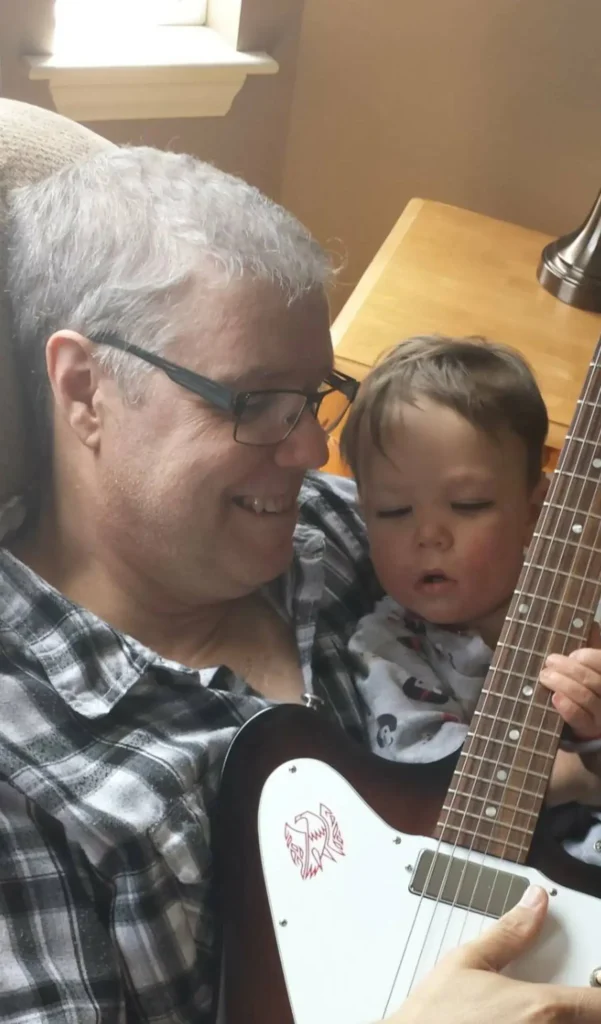

About Your Guitar Lessons
Learning guitar should be something you look forward to, not something that feels complicated or confusing. My lessons are built to keep you progressing at a comfortable pace, with clear goals, practical exercises, and music you actually enjoy playing.
Every student starts with the same foundation, good technique, solid rhythm, and a clear understanding of the fretboard. From there, we follow a structured path that moves naturally from simple chords and songs to scales, improvisation, and full arrangements.
Lessons are personalized to your goals and musical interests, whether that means strumming along to your favorite songs, learning solos, writing your own music, or exploring styles like rock, blues, folk, jazz, or classical.
You’ll always know what to work on between lessons, and you’ll understand why each skill matters. The goal isn’t just to play the right notes, it’s to make music that sounds and feels good.
Beginner Guitar Lessons (0–6 Months)
Building a Solid Foundation
This stage is all about getting comfortable with the guitar—how it feels, sounds, and responds to your hands. You’ll learn the fundamentals that every great player starts with.
Goals
Learn the basic mechanics of guitar playing
Build finger strength and coordination
Play your first simple songs
Topics
1. Guitar Anatomy & Tuning
Get to know the parts of your guitar and how to hold it properly. Learn how to tune with a clip-on or app-based tuner—an essential skill you’ll use every time you play.
2. Basic Technique
Develop good habits early. You’ll focus on proper hand posture, alternate picking, and simple finger exercises to build strength and independence.
3. Basic Open Chords
Start with C, G, D, E, A, Em, Am, and Dm. These are the chords behind hundreds of classic songs. Practice switching between them smoothly.
4. Strumming & Rhythm
Learn how to keep a steady beat with quarter and eighth note strums. Explore simple patterns like down-down-up-up-down-up and how to use muting for better control.
5. Reading Music
Get comfortable with tablature (TAB), chord charts, and basic rhythmic notation so you can read and share music confidently.
6. Songs
Apply what you’ve learned to easy two- and three-chord songs like “Horse with No Name” or “Knockin’ on Heaven’s Door.”
7. Optional: Introduction to Scales
Learn the first position C or G major scale and the basic minor and major pentatonic scales to start understanding melody and lead playing.
Intermediate Guitar Lessons (6 Months – 2 Years)
Expanding Your Musical Vocabulary
Now that you’re comfortable with the basics, this stage focuses on unlocking more of the fretboard, improving your technique, and developing your musical ear.
Goals
Expand your chord and scale knowledge
Improve timing, accuracy, and tone
Begin soloing and playing more complex songs
Topics
1. Chord Extensions & Barre Chords
Learn to play movable chord shapes like F and B major, as well as minor barre chords. Add richer sounds with 7th, sus2, sus4, maj7, and m7 chords.
2. Rhythm & Strumming
Explore sixteenth-note rhythms, shuffle feels, and percussive strumming. Learn palm muting to tighten your sound and improve your groove.
3. Scales & Improvisation
Take your pentatonic scales across the neck and add new ones; like the blues, major, and natural minor scales. Begin exploring modes such as Ionian and Aeolian.
4. Technique Development
Add expression with hammer-ons, pull-offs, slides, bends, and vibrato. Start learning arpeggios and simple fingerpicking patterns.
5. Reading & Theory
Dive deeper into rhythmic notation and note reading up to the fifth fret. Study key signatures, intervals, and the circle of fifths to understand how songs fit together.
6. Songs & Repertoire
Learn songs that include barre chords, riffs, and short solos. Play from styles like rock, pop, blues, and folk.
7. Optional
Experiment with using a capo, or start exploring songwriting basics to create your own music.
Advanced Guitar Lessons (2+ Years)
Mastering the Neck and Making Music Your Own
At this stage, you’re no longer just learning songs; you’re learning the language of music. You’ll refine your technique, understand theory deeply, and express yourself freely on the instrument.
Goals
Master the full fretboard
Play confidently in any genre
Apply theory to writing and improvisation
Topics
1. Advanced Chords
Explore jazz voicings, drop-2 and drop-3 shapes, inversions, and chord substitutions. Begin blending melody and harmony with chord-melody techniques.
2. Scales & Modes
Learn the complete modal system—Dorian, Mixolydian, Lydian, and more. Add harmonic minor, melodic minor, and other advanced scales like diminished and whole tone.
3. Improvisation & Soloing
Develop phrasing, target tones, and melodic ideas that follow the chords. Practice modal interchange and connecting ideas smoothly across the fretboard.
4. Fingerstyle & Advanced Technique
Learn Travis picking, hybrid picking, sweep picking, and tapping. Focus on control and tone to make complex techniques sound clean and musical.
5. Composition & Arranging
Write your own chord progressions, melodies, and solos. Learn to arrange full pieces for solo guitar or band settings.
6. Music Theory & Ear Training
Transcribe songs and solos by ear, analyze harmonies, and learn how modulation and chord function shape the music you love.
7. Performance & Practice
Prepare full pieces for performance, use loopers or backing tracks, and practice ensemble playing to build real-world confidence.
8. Repertoire
Tackle advanced songs—jazz standards, and complex rock or blues solos. Learn improvisation-heavy pieces that challenge and inspire you.
Optional Extensions (All Levels)
Choose Your Own Path
Once you’ve built your foundation, you can specialize in the styles that inspire you most.
Jazz Path: Real Book study, chord–scale relationships, and improvisation concepts.
Rock/Metal Path: Riff building, advanced rhythm work, and high-speed technique.
Songwriting Path: Lyric writing, DAW basics, and simple home recording setups.